
Running a Sex Offender Check in Keokuk County
The Iowa Sex Offender Registry is the main public channel for a Keokuk County sex offender check. Iowa DPS and its Division of Criminal Investigation manage the statewide system. A searcher can filter for Keokuk County, look for a known name, or use city, ZIP, address, and map tools. The sheriff does not publish a separate Keokuk County list. It handles registration and local verification, while DCI publishes the lawful public subset online.
The official registry landing page shows how search, map, active, and most-wanted tools sit within one system.
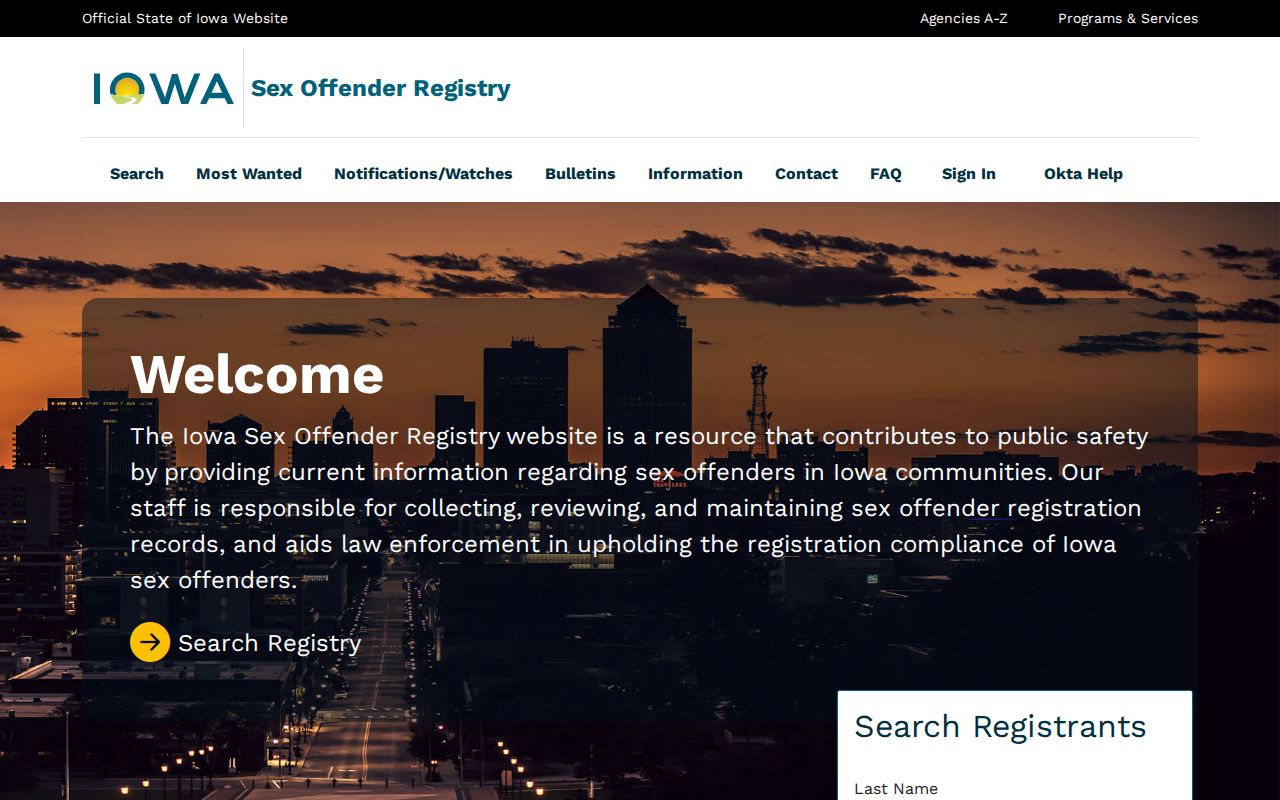
That shared entry point helps a reader choose a search method before reviewing any individual profile. Results typically refresh hourly during weekday business hours, but the registry warns that maps, locations, accuracy, and completeness are not guaranteed. Confirm a material concern with the Keokuk County Sheriff's Office or registry staff.
Keokuk County Registry Redesign
The public workflow changed in August 2025. An Iowa DPS release about the registry redesign describes enhanced search help, interactive mapping, active listings, and most-wanted tools. Those changes matter for Keokuk County searches because the portal now offers more than a basic last-name box. Location and identifier searches can answer different safety questions without assuming a person's name is known.
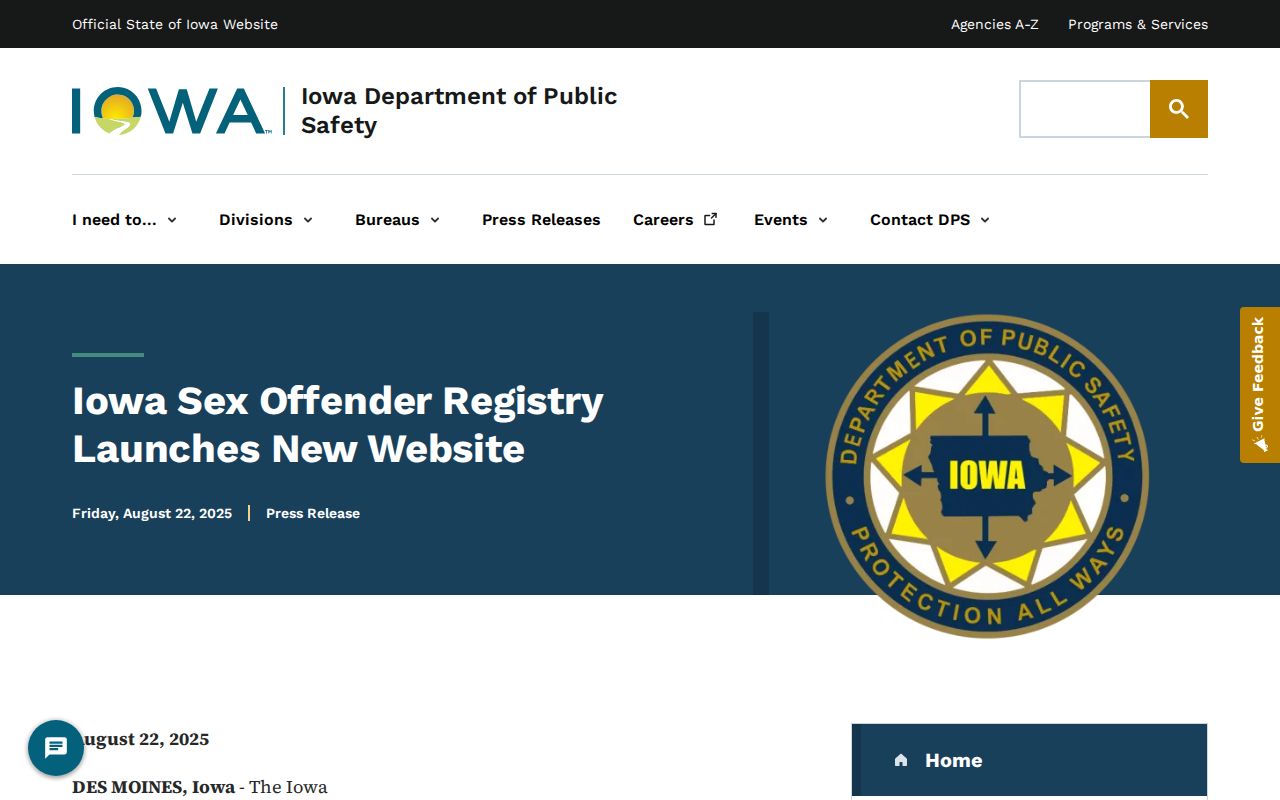
The redesigned interface is useful, but its gate remains deliberate. A visitor must accept the terms and complete reCAPTCHA. Automated collection is blocked except through authorized routes. That step protects the system from bulk misuse and explains why a bookmark may not open straight into live results.
Searching the Iowa Sex Offender Registry
Begin at the official basic-search gate. Choose a narrow method that matches what is known. A county filter is best for broad Keokuk County awareness. A name can help identify a specific person, while an address and radius support a neighborhood check. Email, phone, internet identifier, and vehicle plate searches serve cases where the known fact is not a name.
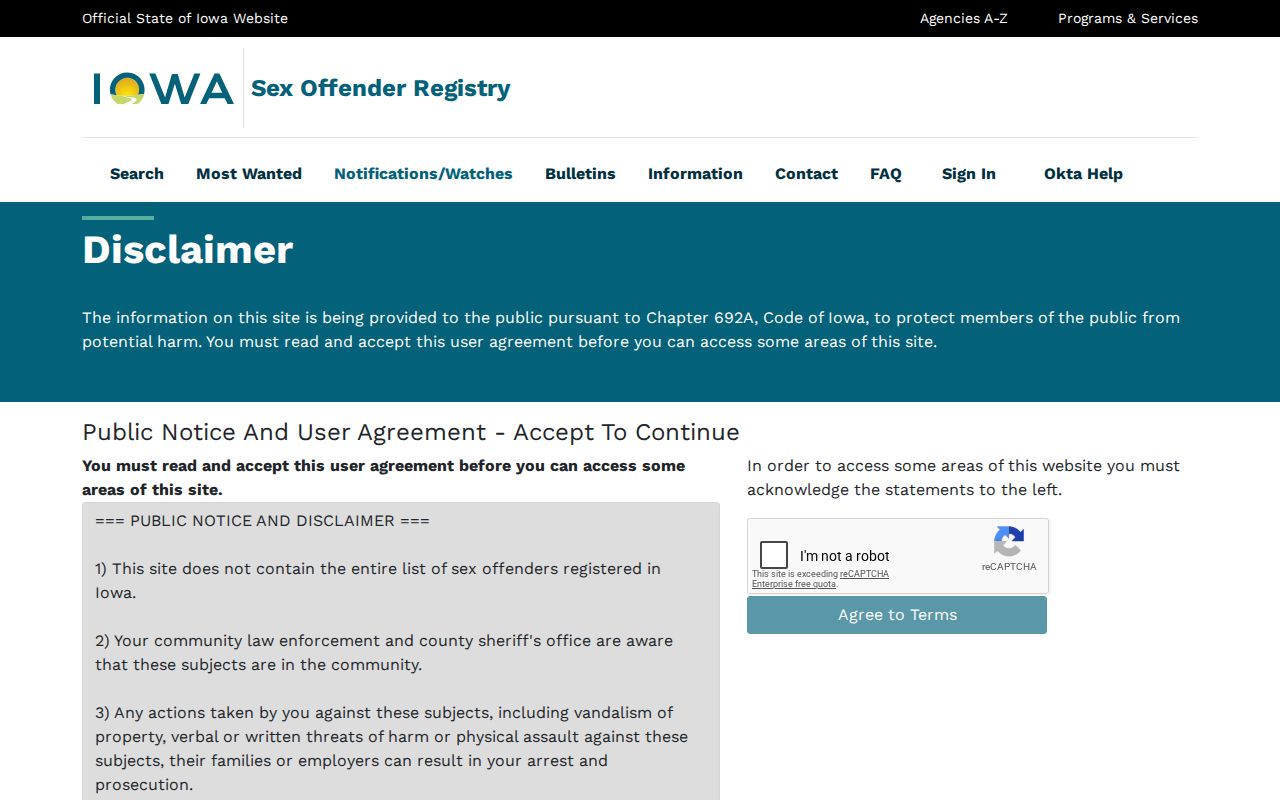
The search screen separates these routes so a reader does not force every question through a name match.
- Open the registry, read the use terms, accept them, and complete reCAPTCHA.
- Select name, Keokuk County, city, ZIP, address radius, or an available specialized identifier.
- Review the returned list and compare aliases, photographs, description, and residence information.
- Open the profile, read the qualifying offense and restriction flags, then report a clear error to the proper office.
| Search mode | Type | Required | Use |
|---|---|---|---|
| Name | Text | Depends on mode | Known person or alias |
| County | Selector | For county search | Choose Keokuk |
| City or ZIP | Location input | For that mode | Narrow a local area |
| Address radius | Map search | Address-based | Exact radius choices vary in the live tool |
| Email, phone, or plate | Specialized | For that mode | Search a known identifier |
Set a Keokuk County Watch
A watch is more useful than repeating the same Keokuk County registry search each week. Iowa permits watches tied to an address and radius, a city, the county, a ZIP code, one registrant, or a selected group. Email notices can report moves into, out of, or within the watched area. The registry search and watch FAQ explains those alert choices and the limits of the information.
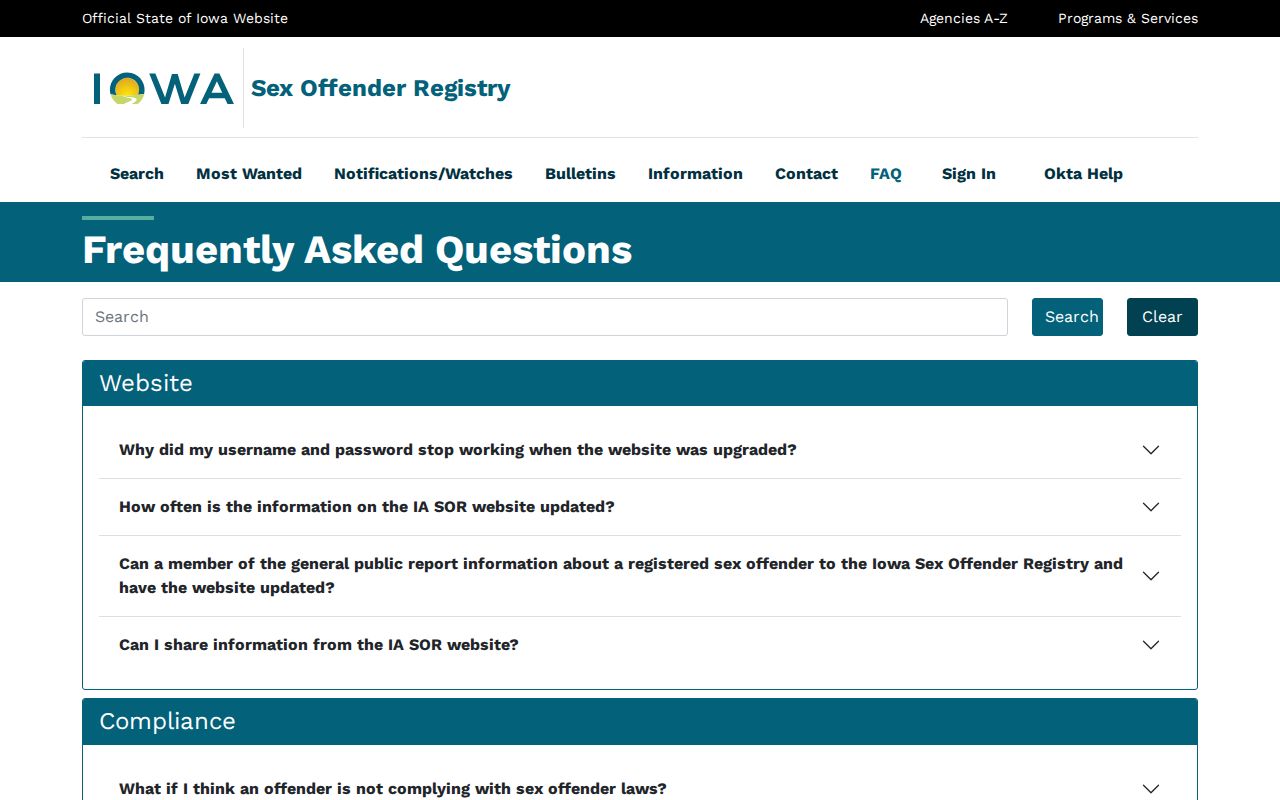
For community awareness, this is the practical substitute for routine door-to-door notice. Iowa requires statutory notice to schools, but does not require individual neighborhood visits. An alert reports a registry change. It does not prove a new offense, show every local police contact, or guarantee that the mapped point is exact.
Note: A registry watch tracks published changes; it does not replace a live call to law enforcement when safety is at immediate risk.
What a Registry Profile Shows
Iowa Code section 692A.121 defines the public profile. The visible facts help distinguish people with similar names and explain why the listing exists. The statute also draws a clear line around details that stay off the public web. A Keokuk County sex offender profile should not be read as a complete supervision file.
| Name and aliases | Legal name plus published nicknames and aliases. |
|---|---|
| Identity details | Date of birth, photograph, physical description, and listed scars, marks, or tattoos. |
| Residence | The residence information authorized for public release and related map display. |
| Qualifying offense | Statutory citation and text for the offense that triggered registration. |
| Restriction flags | Published indicators for a residence rule or exclusion zone when applicable. |
| Withheld fields | Protected identity data and details not authorized by statute, including employer and school identity or location. |
Do not infer a risk score from a tier. Iowa's tiers classify offenses and set verification frequency. They are not a simple prediction about conduct. The public record also does not authorize a claim about a victim or any fact the profile withholds.
Keokuk County Registry Check-Ins
Local registration occurs at the Keokuk County Sheriff's Office, 204 South Stone Street in Sigourney. Call 641-622-2727 before a visit. Iowa DOC registers people before release, while others report to the sheriff. The sheriff forwards information to DCI, which supports the state database. This local-to-state path explains why the sheriff is the best contact for a Keokuk County check-in question and registry staff are best for a web-profile error.
Keokuk County Sheriff's Office
204 S. Stone Street
Sigourney, IA 52591
641-622-2727
Monday through Friday, 8:00 a.m. to 4:30 p.m.
Each registrant is also assessed a $25 annual sheriff fee. Iowa Code section 692A.110 permits added time, installment payments, or waiver when a person cannot pay. That fee is an administrative registration rule, not a charge to search the public registry.
Registration Requirements and Levels in Iowa
Iowa's three tiers set how often a person verifies information with the sheriff. Tier I reports annually. Tier II reports every six months. Tier III reports every three months. Section 692A.108 also requires photographs to be updated at least once each year. Duration comes from the separate rules in section 692A.106, so no tier should be converted into an automatic 10-year, 25-year, or lifetime label.
| Tier | Duration rule | Verification |
|---|---|---|
| Tier I | Apply section 692A.106; tier alone does not set the term | Annually |
| Tier II | Apply section 692A.106; added conditions may extend the term | Every six months |
| Tier III | Apply section 692A.106; specified facts can require life | Every three months |
The default registration period is ten years, but several rules alter it. A special sentence lasts through that sentence and at least ten years. Revoked supervision can restart time upon release. A registry violation adds ten years. A second qualifying conviction, aggravated offense, prior registrable offense, sexually violent predator finding, and other specified facts can lead to life. An out-of-state registrant serves the longer applicable term.
Keokuk County's Limited Distance Rule
Iowa's 2,000-foot residence limit is not universal. Under section 692A.114, it applies to a person with an aggravated offense against a minor and restricts residence near a school or child-care facility. A Keokuk County map pin or tier label alone does not show that every registrant faces this rule. Read the public restriction flag and the qualifying offense, then ask the sheriff about a local compliance question.
This distinction prevents a common mistake. Tier governs reporting frequency, duration follows section 692A.106, and the distance rule turns on a specific offense category. These are three related but separate parts of Iowa law. Treating them as one scale can produce a false claim about where a person may live or how long registration continues.
Keokuk and National Registry Searches
The Iowa registry is the first source for Keokuk County detail. A reader who needs to check beyond Iowa can add the U.S. Department of Justice's National Sex Offender Public Website. NSOPW searches participating jurisdictions and helps when a person may have moved across state lines. It does not replace Iowa's own profile, Keokuk County sheriff contact, or a local report of suspected noncompliance.
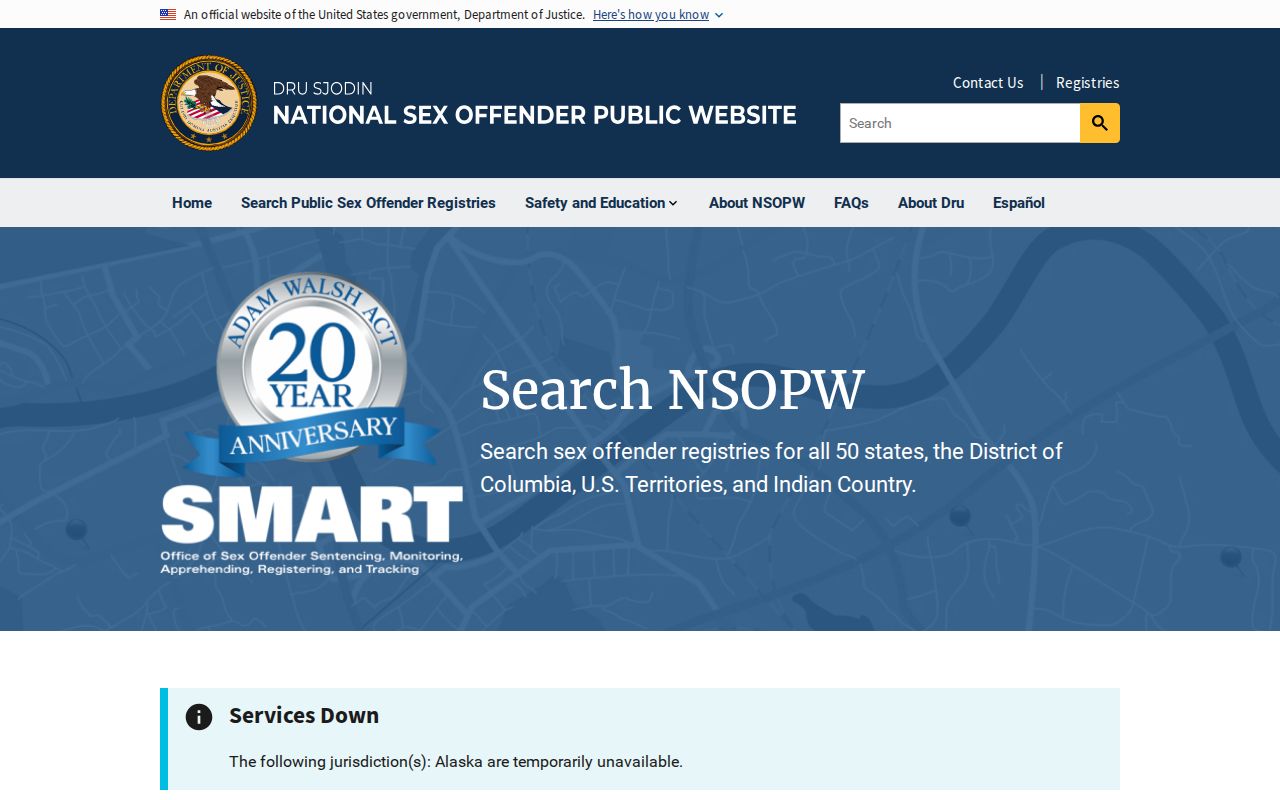
The national layer widens geographic reach, while the Iowa portal provides the state-specific terms, watches, and restriction flags. Compare both when movement between states is the concern. If a Keokuk County listing appears wrong, use the local or state correction route instead of assuming a national result will resolve the mismatch.
Lawful Use and Community Notification
Registry information supports personal safety planning and community awareness. It must be read with care. A listed qualifying offense and registration duty do not establish a new crime, and an address marker is not a promise of real-time location. Report suspected criminal conduct to law enforcement. Send a profile discrepancy to the Iowa Sex Offender Registry office at 515-725-6050 or sorinfo@dps.state.ia.us.
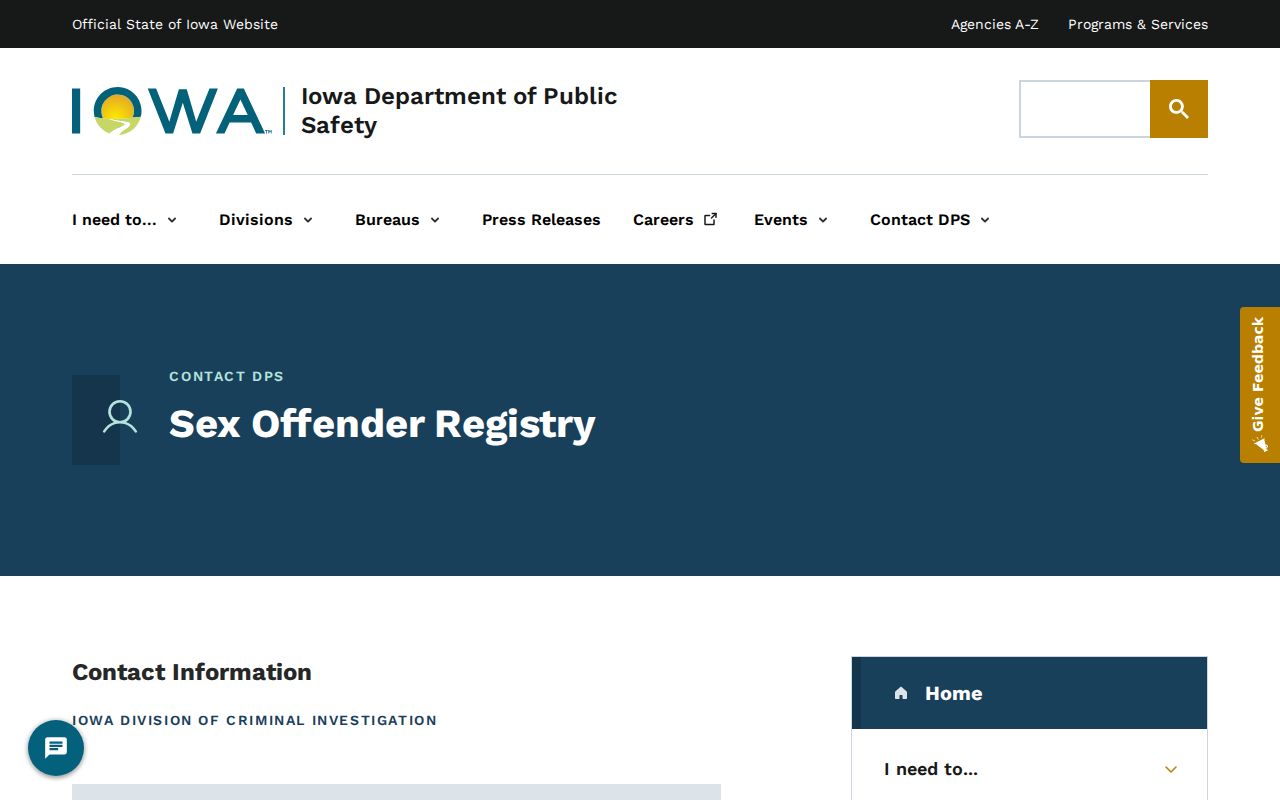
The state contact closes the loop when a published field, move, or status needs review, while the sheriff handles Keokuk County registration operations.
Use registry information lawfully: The official registry warning states that vandalism, threats, stalking, harassment, or assault against registrants, their families, or others can lead to arrest and prosecution.
Keep the response tied to verified facts. A screenshot may age quickly, so return to the live registry before acting on a saved result. For an urgent threat, contact law enforcement rather than registry staff.
Suspected noncompliance should also go to law enforcement, not to a public confrontation. Give the office the published name, the specific fact that appears wrong, and where it was observed. Staff can compare the report with the registration file and decide what follow-up the law permits.